BODY FILM ESSAY
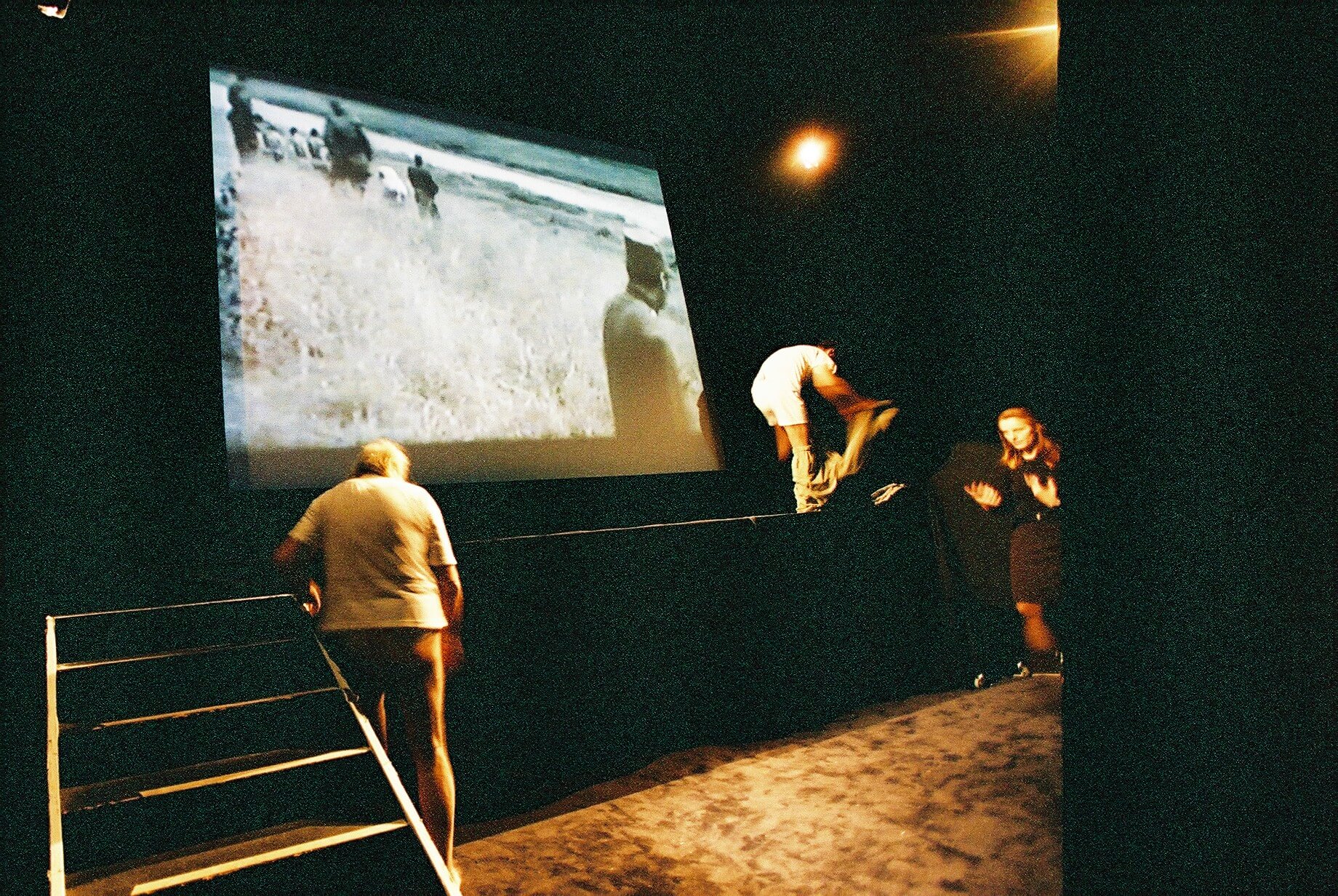
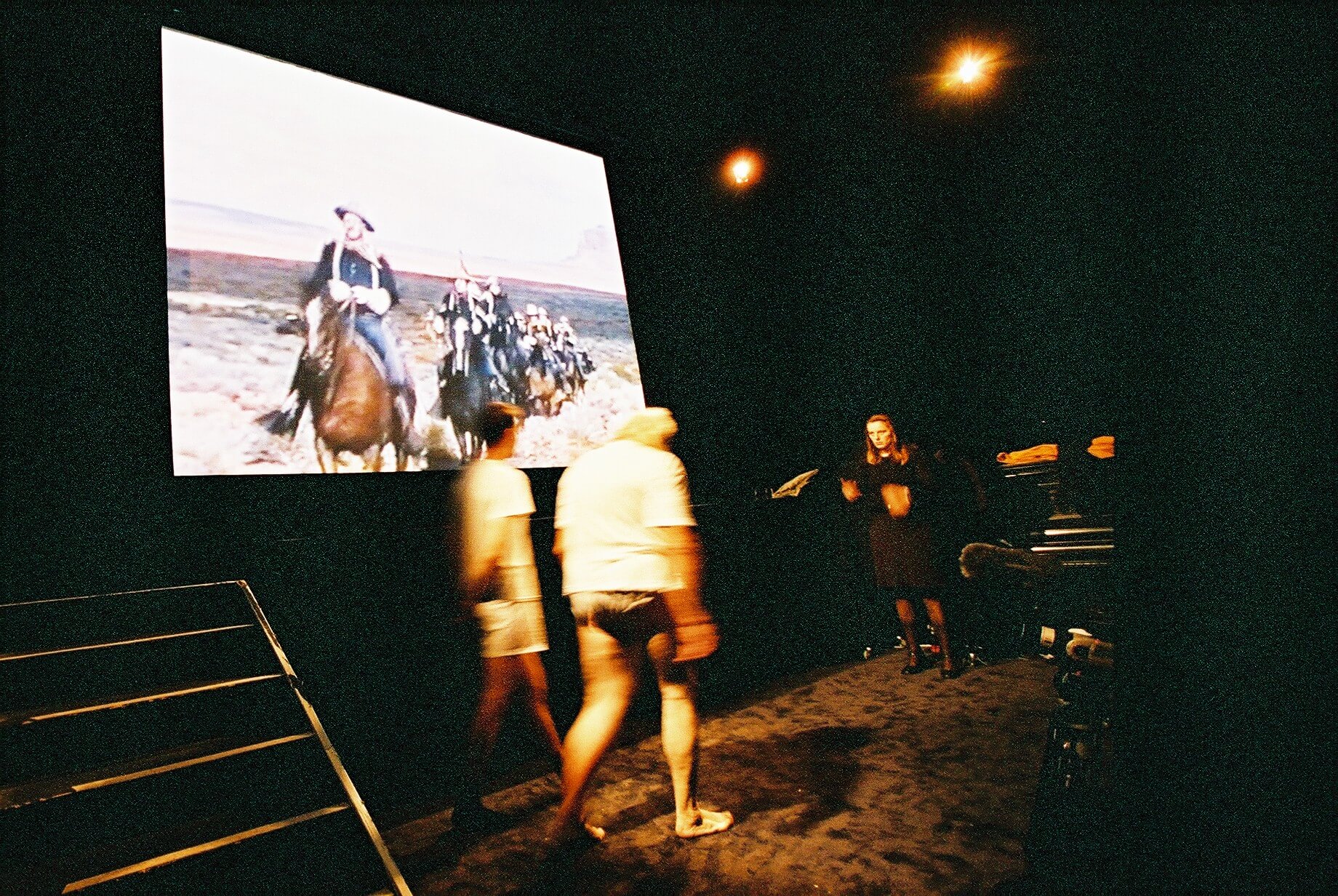
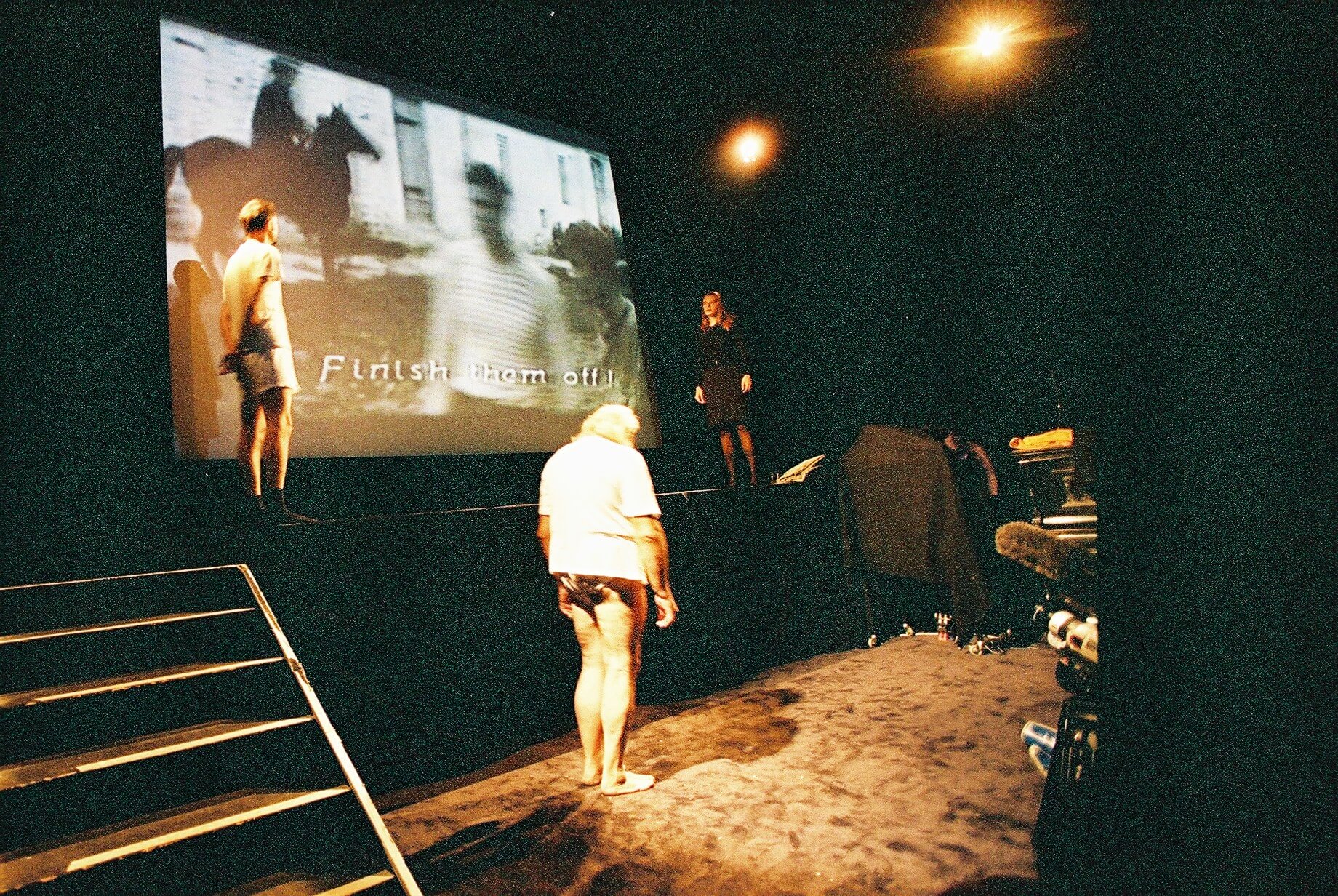
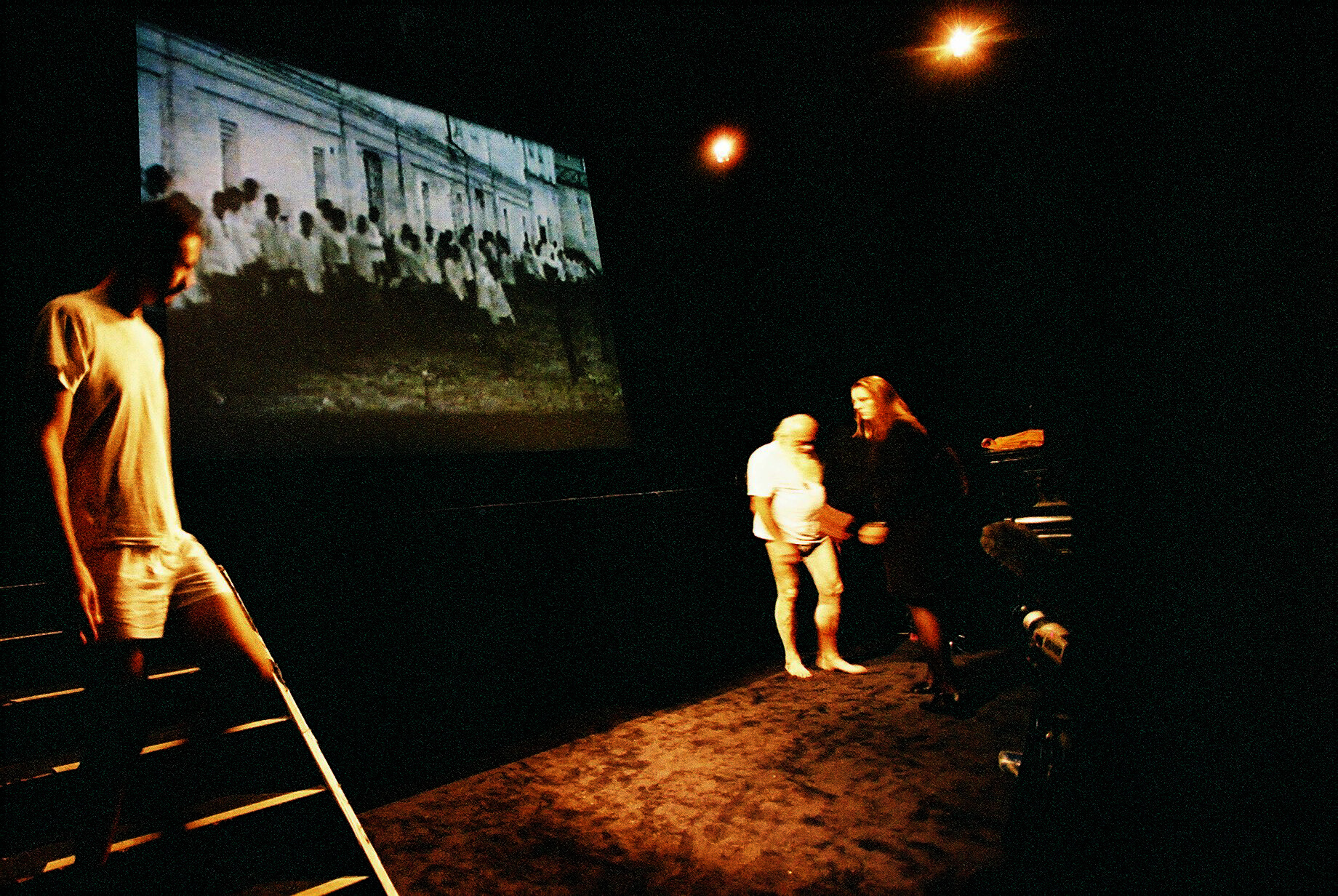
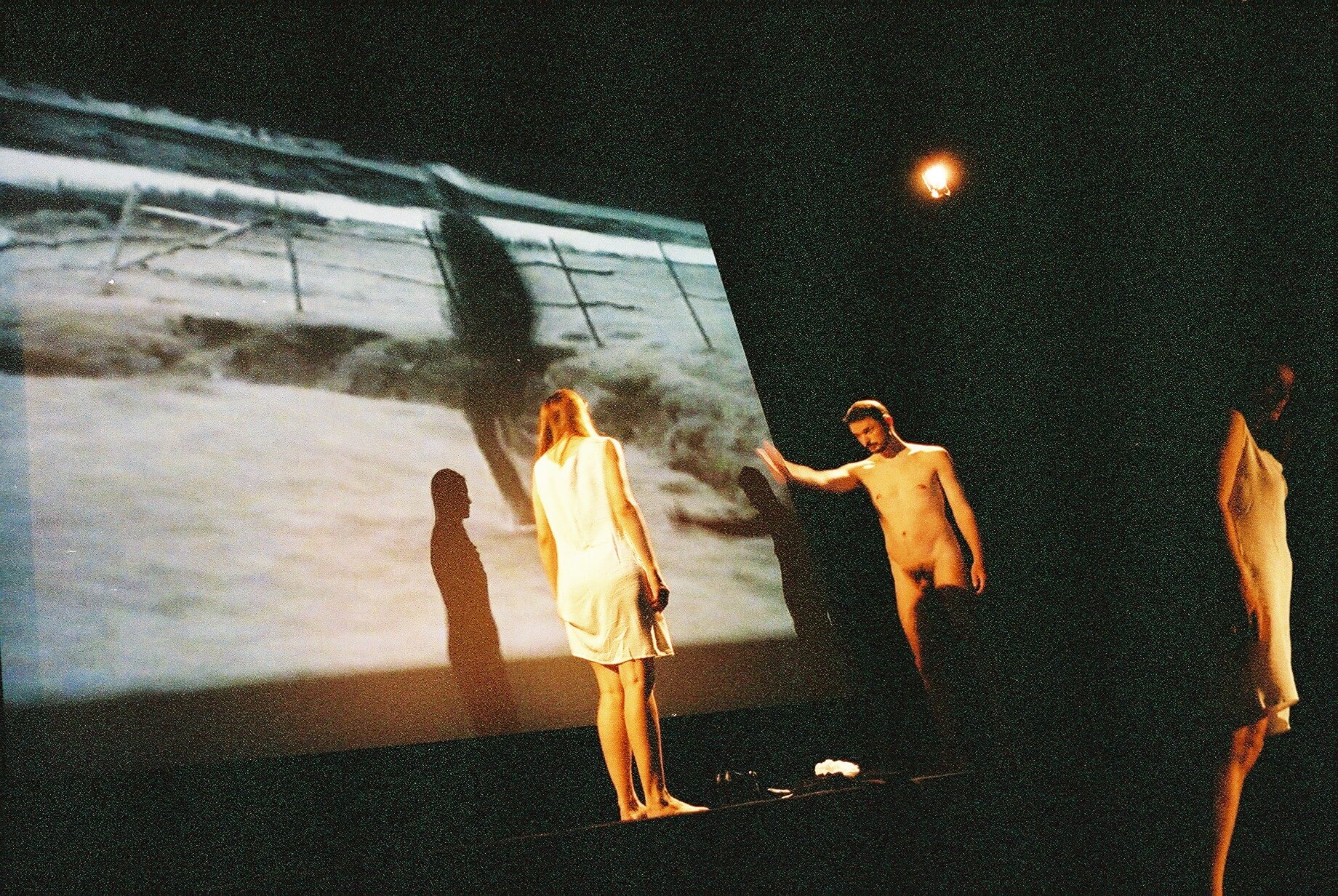
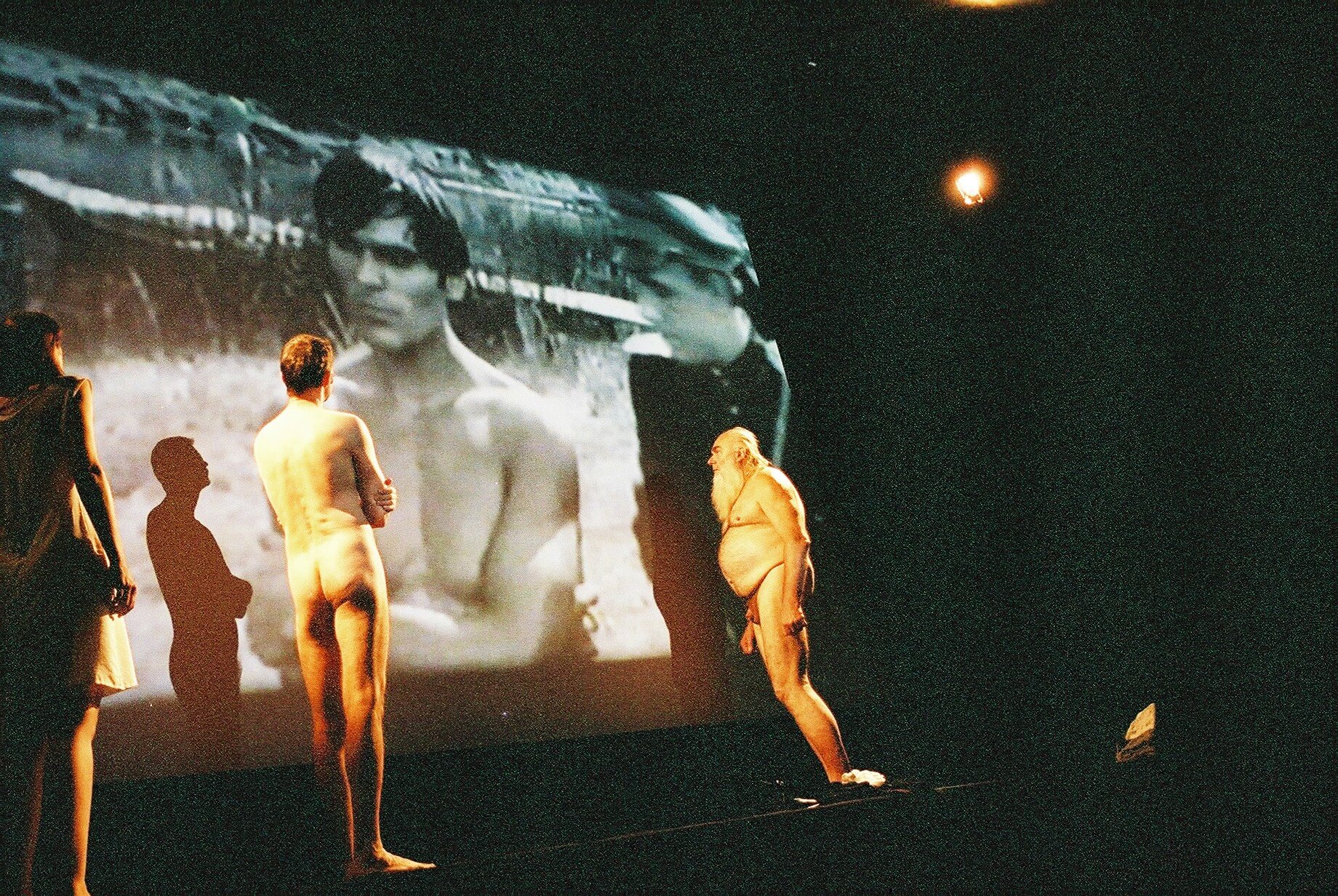
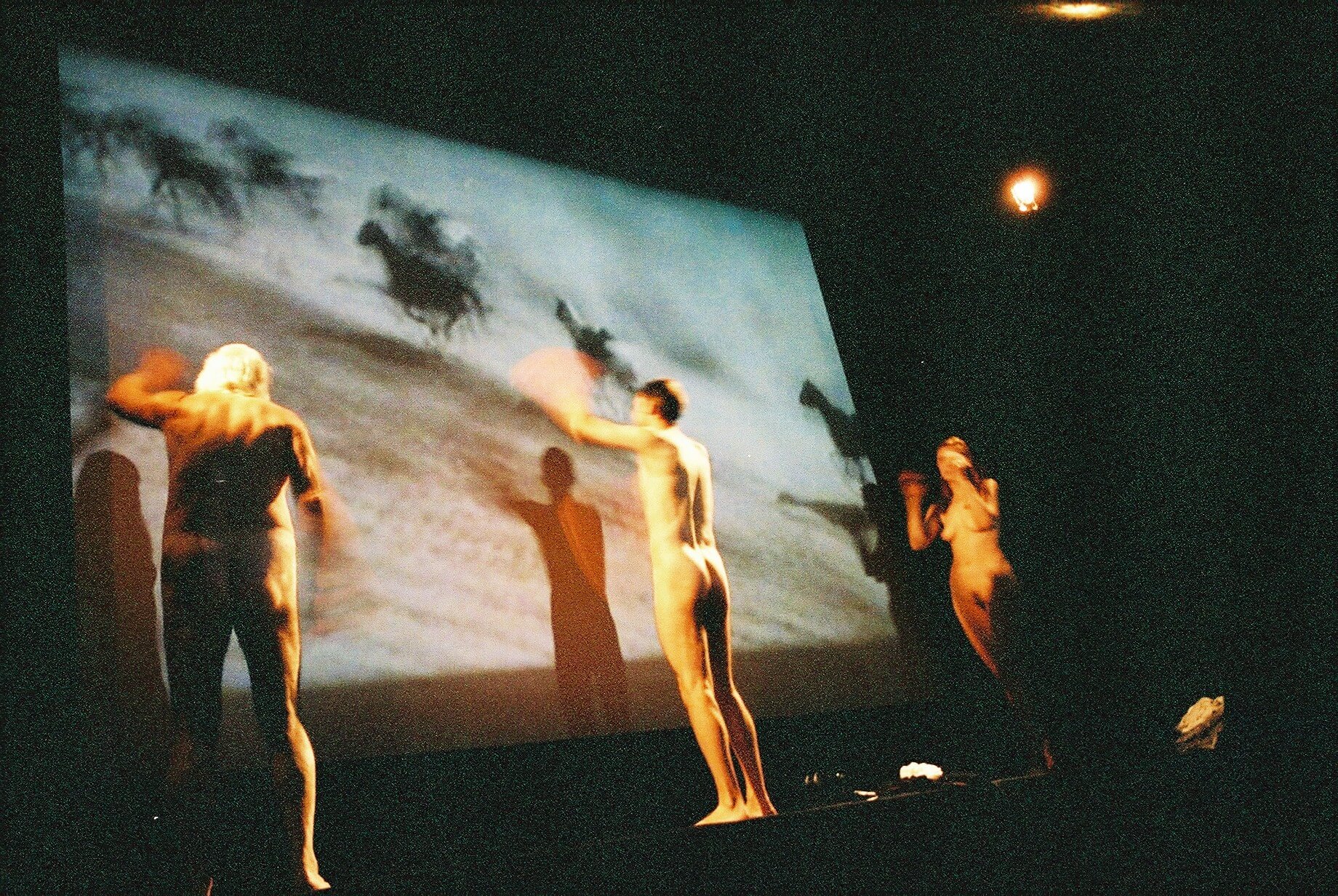
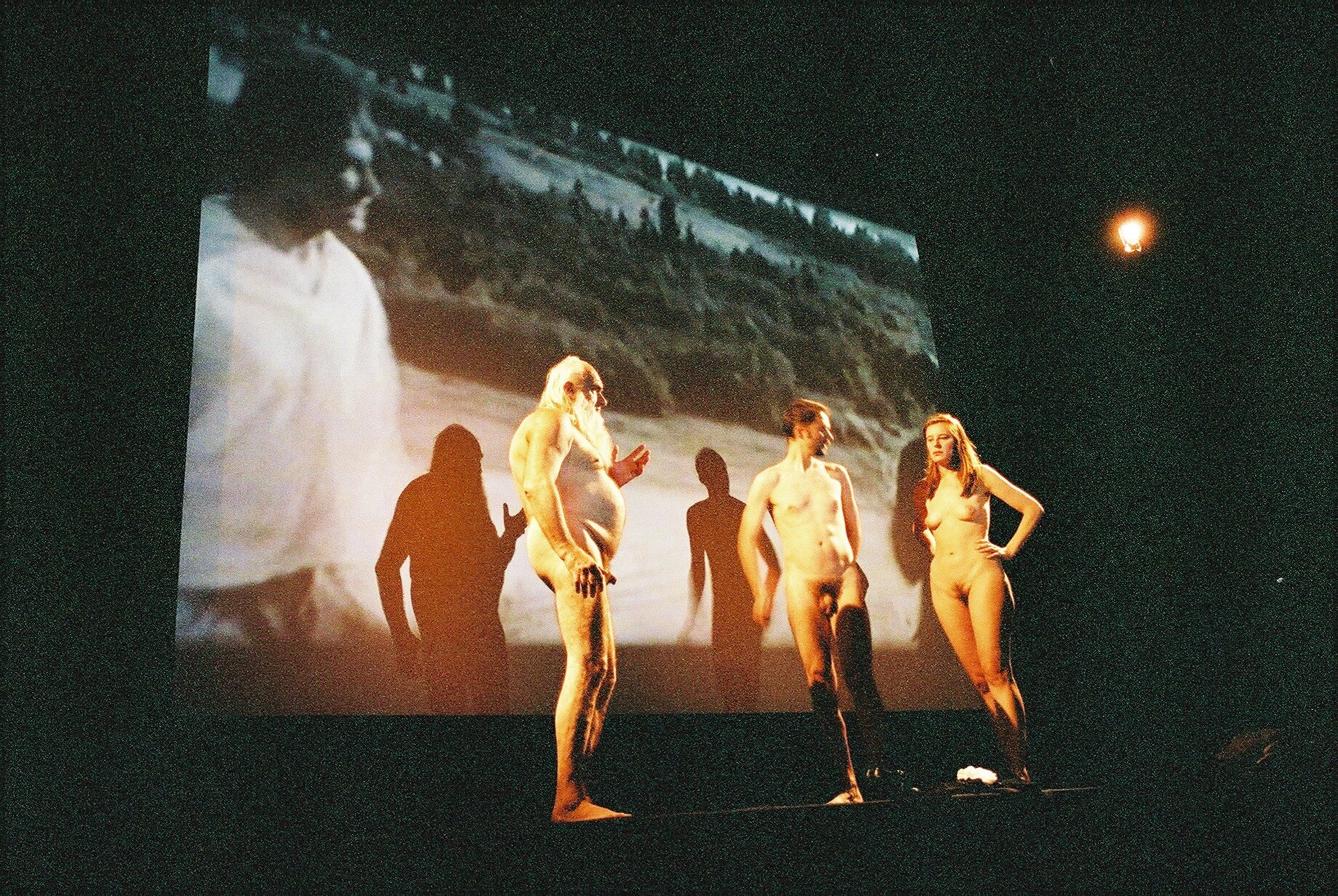
Created by the informal three-member artists’ group XXXL—Tomislav Gotovac, Aleksandar Battista Ilić, and Ivana Keser—the performance Body Film Essay (2002) was inspired by classic films characterized by highly choreographed movements, commands, and group actions within the landscape. The films referenced in the performance include The Red and the White (Csillagosok, katonák, directed by Miklós Jancsó, 1967) and She Wore a Yellow Ribbon (directed by John Ford, 1949).
The performance focuses on choreography, movement, and the dynamics of giving and receiving orders.
In John Ford’s She Wore a Yellow Ribbon, a cavalry captain on the eve of his retirement undertakes one final patrol to prevent an impending large-scale Native American attack. Travelling from camp to camp, each under threat, he leads his patrol and accompanying civilians across a harsh desert landscape. The title refers to the traditional folk song; a yellow ribbon was worn by women in the American West as a symbol of love and loyalty to a man away at war.
Miklós Jancsó’s The Red and the White is set in 1919 during the Russian Civil War. Hungarian volunteers join the Red revolutionary forces in their struggle against the White counter-revolutionaries, who seek to restore the former Tsarist order. Many Hungarian soldiers, who had become prisoners of war in Russia during the First World War, fought on the side of the Bolsheviks. Others were forced to confront the White Guard forces, whose methods are portrayed in the film as particularly brutal.
Through references to these films, Body Film Essay explores the relationship between the body, collective movement, authority, obedience, and resistance.
The performance was held at:
2002 – Helle Nächte, Cinema performance event, Stadtkino/Kunsthale Basel
2003 – Carte Blanche, Performance event , Tanzquartier, Vienna
2004 – East-West, Perfromances and Simposium, Tanzquartier, Vienna